```html ```

Climate Adaptation

Our team of experts takes a holistic approach to climate adaptation, building the connections between the risks posed directly by the effects of climate change, and the impacts that these can cause to social, cultural, economic and ecological wellbeing.
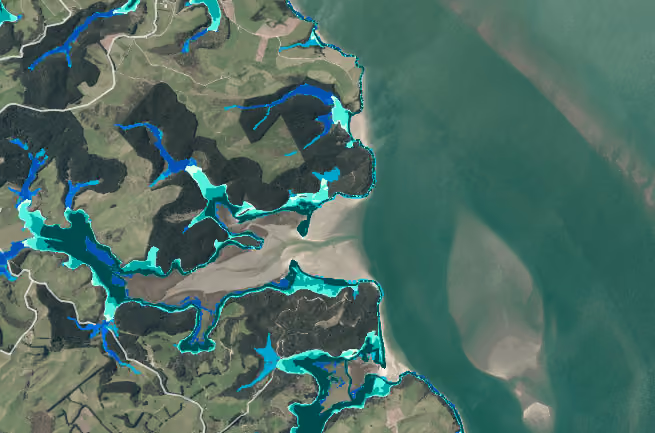
HOVER OVER THE LAYERS TO SEE MORE

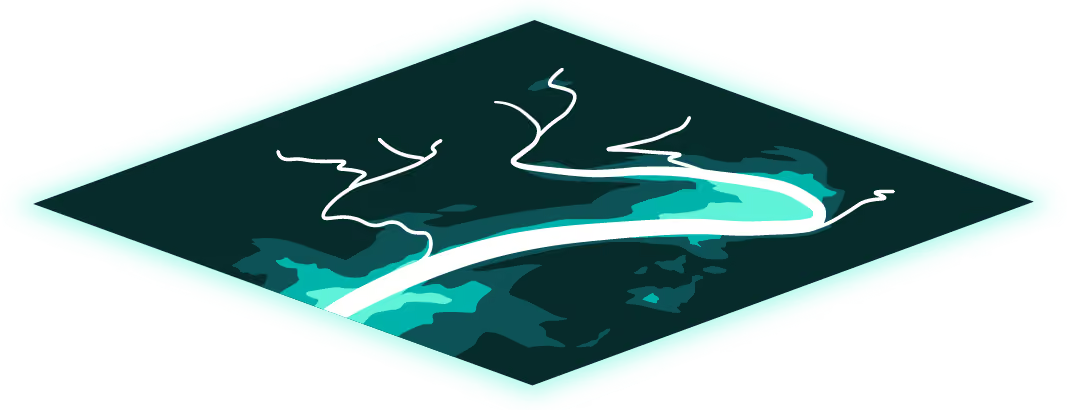
Hydrological Risks

Assessing how the risks of extreme weather events and sea-level rise could impact catchments, communities, and infrastructure.
Sea Level Rise
Flood Risk
Inundation
+ more hydrological risk assessments

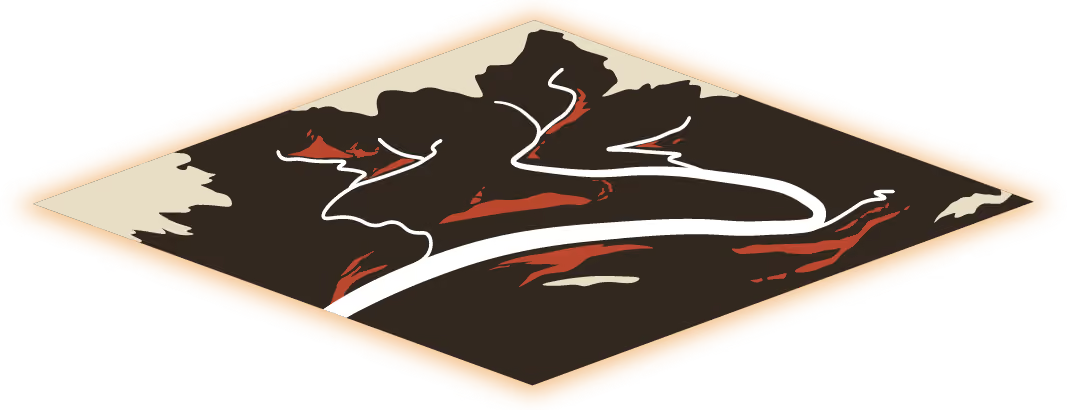
Land Risks

Understanding the risks posed by the changing landscapes and the potential for slips, as well as impacts from extended periods of drought.
Instability & Slip Risks
Land Hazards
Drought-Prone Areas
+ more land risk assessments

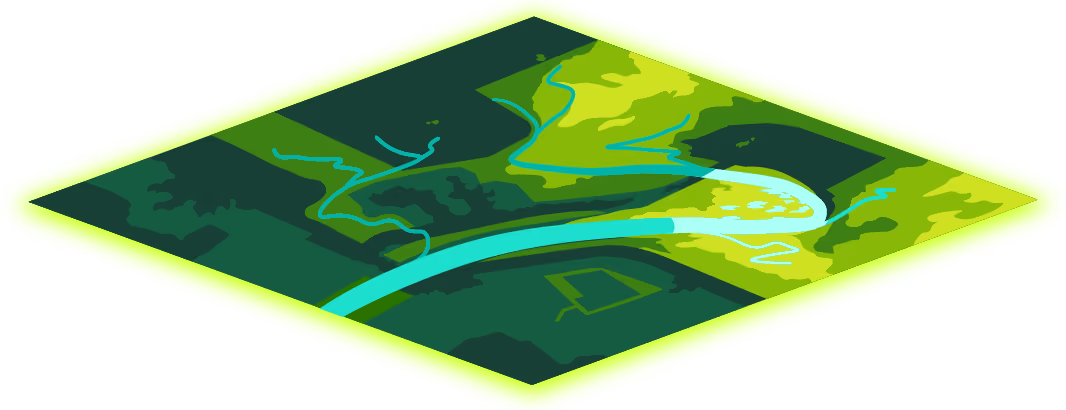
Natural Environment

Considering all aspects of the natural environment, including terrestrial, freshwater and coastal ecosystems and how they will be affected by climate change.
Catchment Zones
Ecological Areas
Biodiversity
Outstanding Natural Features
+ more environmental risk assessments

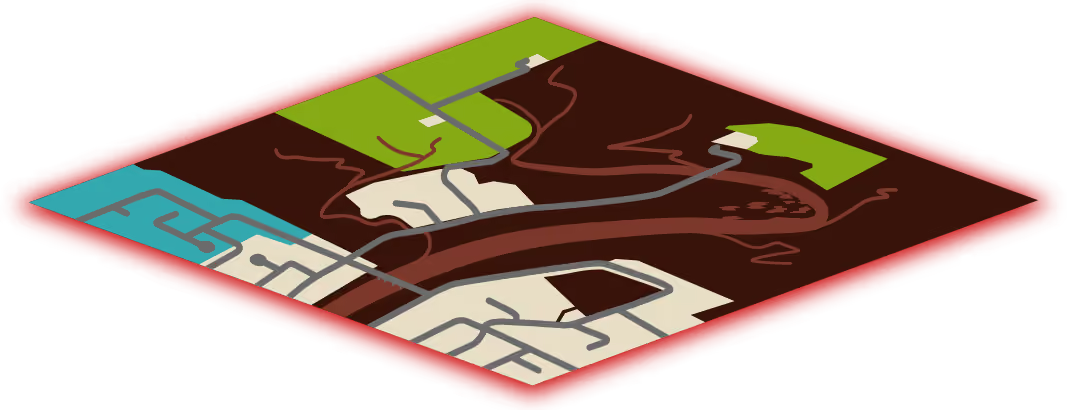
Built Environment

Assessing infrastructure and urban spaces to identify the potential for network failure, bottlenecks, and community isolation.
Lifeline Utilities
Three Waters Infrastructure
Property Impacts
Transportation Networks
+ more built environment assessments

Communities

Assessing social infrastructure, access to key services and the vulnerability of communities to the effects of climate change.
Community Services
Emergency Response Ability
Socioeconomic Vulnerability
Cultural Impacts
+ more community risk assessments

Land Use

Understanding how a changing climate will affect land use, production, cultural significance, and reliance on the health of our natural environment.
Residential / Industrial / Commercial
Primary Industries
Culturally Significant Sites
Reliance on Natural Environment
+ more land use assessments
Hydrology and flood risk assessment layer for climate adaptation in New Zealand
An land hazard risk assessment layer including
A GIS layer assessing the state of the natural environment and the risks posed by climate change within this New Zealand and Pacific Island catchment
Illustration of the layer assessed for infrastructure, properties and the impacts of climate change and storms on the built environment
Analysis of the impacts to particular communities and the socioeconomic vulnerabilities of areas to the effects of climate change and extreme weather events
An analysis of how the land is used across a catchment

Adaptation Plans Designed
To Adapt

Dynamic Adaptation Planning ▸
Climate adaptation starts with recognising where action is needed most. Understanding the risks to our communities, infrastructure, and the environment can be the difference between being pepared and paying the costs as the threat of extreme weather events grows.

Morphum’s approach to climate resilience and adaptation planning supports councils and decision-makers across Aotearoa and the Pacific. Our team develops reactive adaptation plans and strategies that consider every layer of impact to communities, infrastructure and the environment, including new actions for when certain conditions shift.

With experienced climate specialists, you can build the dynamic pathways, set the signals and triggers and provide a clear, prioritised action plan to build more resilient communities.
An illustration representative of how Dynamic Adaptive Pathways Planning systems work in relation to preparing for climate change sea level rise

Dynamic Adaptive Pathways Planning

It's important to have a plan that can adapt as the situation changes. Traditional, static infrastructure plans are no longer enough to protect our communities from climate uncertainty.

Dynamic Adaptive Pathways Planning (DAPP) is a reactive approach that helps councils and decision-makers plan for the effects of Climate Change without locking in a single long-term response. Morphum’s methods aligns with national and international standards for DAPPs, and by developing dynamic and reactive options we can set out clear signals and triggers that tell teams when it’s time to shift to a different approach for Climate Adaptation. These triggers are tied to measurable environmental conditions such as sea-level rise, allowing decisions  to be shifted to new, pre-planned resilience projects.

Transitioning from a theoretical framework to an actionable strategy requires specialised expertise. Morphum works with councils to apply DAPP to their own catchments and coastlines, building the pathways, setting the monitoring triggers, and turning the framework into a dynamic plan councils can actually implement and revisit as risk profiles shift.
Our Planning Methodology ▸

Our Planning Methodology

No two catchments are the same, and our team tailors each adaptation plan to work with the real-world conditions on the site.

The standard methodology for supporting climate adaptation is combined with our expertise in developing geospatial tools, working with communities, designing resilient infrastructure using nature-based solutions.
A flood risk map analysis highlighting where floodplains and highest hydrological risks lie in a New Zealand catchment

1. Climate Risk Assessment

Geospatial Climate Risk Layers (CRL) are added to the outcomes of assessments to build our a fully integrated climate risk assessment.

These assessments follow the national and international standards and covers hydrological, environmental, geological, cultural, community, land use and infrastructure risks posed by the effects of climate change.
Opportunity screening being conducted by a GIS analyst at Morphum Environmental for climate adaptation projects across a catchment

2. Issues & Options Assessments

After identifying high-risk areas exposed to major climate issues, our climate team looks at the critical infrastructure and network constraints that need to be improved to reduce these impacts.

The issues then undergo an options assessment to figure out the most feasible and appropriate intervention. We look at nature-based solutions, green infrastructure, and integrations with existing blue-green networks.
An environmental scientist on-site reviewing a map of assessment and analysis sites to conduct an assessment to support ongoing projects

3. Intervention Prioritisation

Our specialists visit the locations on the list of intervention opportunities, assessing the site to help refine the scope, understand site-specific challenges and inform the design recommendations.

The priority list is prepared with in-depth description of intervention opportunities and recommendations. The final report is designed to inform climate resilience capital investment programmes and align with catchment management and wider regional planning.
Supervising the construction of a new nursery retaining wall to expand iwi ability to grow new native plants

4. Design & Delivery

Take the actions to improve the resilience of communities or individual properties with On-Site Water & Wastewater Systems (OSWWW),Water Sensitive Urban Design (WSUD), slip prevention, wetland design, stream works and more.

Utilising the prioritised list of opportunities, our engineering and ecology teams work together to support the design & delivery of projects, and ensure that our communities get nature-based solutions that improve their climate resilience.

Climate Risk Assessment & Adaptation Projects

All Projects ▸

Why choose Morphum for your

Business Sustainability

Ecology & Science Services

Simplifying Sustainability

With support from our team, you'll be able to see the full context of what sustainability looks like for your business.

Clear actions, set targets and measured progress will help you understand where you are and what is next for your business.
Carbon Accreditation Icon

Experienced and Accredited

We are CarboNZero accredited and ISO14001 accredited, and have been for more than a decade.

We know the process and requirements back to front, and we can replicate our positive impact and successful accreditation with other businesses.
Sustainable Procurement Services Icon

Commited to Positive Change

Our goal since the day Morphum was founded has been to do more than just prevent degradation of our environment.

Morphum strives to create a positive result for our environment, a net-gain for ecosystems, leaving the spaces we operate in healthier than before.
Performing an on-site construction environmental assessment to meet regulations

Our Road To Carbon Neutrality

Starting on the path to becoming carbon neutral was a significant step for Morphum early in our growth.

We first became carbon zero certified 14 years ago, and we're sharing our learnings with more businesses.
Read More ▸Our Sustainability Report ▸

Contact Us

Reach out to one of our engineers, scientists or sustainability specialists.
We aim to respond to your enquiry within 1-2 business days, with the exception of public holidays.
Thank you! Your submission has been received! We will be in touch soon.
Error! Something has gone wrong, please try again or contact us by phone or email above.
Call Now